King Lagazee announces 1st Edition of Jamaica x Ghana Link Up Festival for November 30th, headlined by Wendy Shay, Epixode, Ras Kuuku, Dillgin, Boss Champs, and MORE!

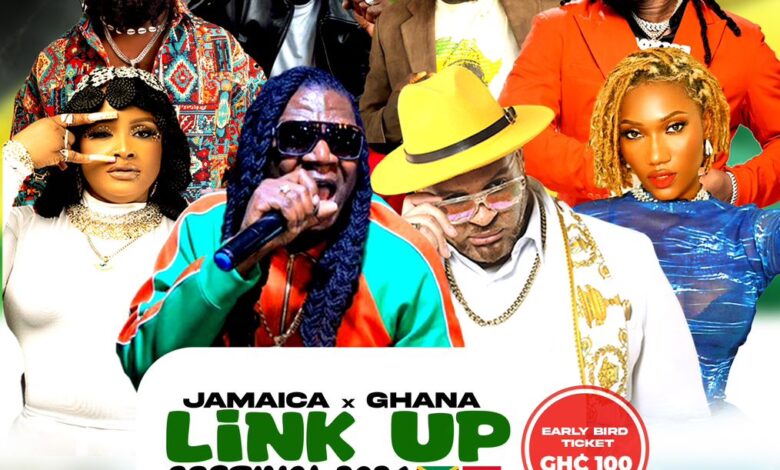
Come November 30th, 2024, all roads lead to Untamed Empire, off the Spintex Road, Adjacent Action Chapel, for this historic event hosted by King Lagazee!
Wendy Shay, Epixode, Ras Kuuku, Konkarah Jahvybz, Osagyefo, Aklerh will be headlining the gig for the Ghana side while Dillgin and Boss Champs will be defending the Jamaican side of the business for this maiden edition of the ‘Jamaica x Ghana LINK UP’ Festival.
This initiative is powered by Lagazee Sound International and Yaad Settingz on Asaase Radio 99.5fm.
Kicking of at 5:00pm on the date, tickets are already out on sale with early bird tickets going for a cool GHC 100 (each).
Buy tickets here: https://ticketmiller.com/event/238-jamaica-x-ghana-link-up-festival
For King Lagazee, defending the Reggae & Dancehall genre over 2 decades and still counting, there’s no better time than now to institutionalize his own concert to celebrate and highlight the ‘twin-genre’. He is very hopeful this maiden edition of the concert will bubble the scene and revitalize the Reggae & Dancehall scene as it used to be.
“Trust me, this is something I’ve always wanted to do and promote Reggae and Dancehall from home and also infuse some new energy into our talents so they can be proud of a concert that takes care of them in terms of what they represent in music. I am very hopeful this will yield meaningful results. We are very open to more sponsors to come on board to support us and as well as partners from across different spheres of the music business to make it possible, not just for once but for subsequent editions”, King Lagazee intimated.
King Lagazee holds a very enviable CV in the Reggae & Dancehall terrain, both locally and internationally, as the most decorated award-winning Selector on Radio and Television for the Reggae/Dancehall Fraternity. King Lagazee has been at the forefront of the Reggae, Dancehall & Sound System Culture for over 2 decades and he is a well-respected crooner in that field both locally and internationally with his huge catalogue of well-meaning interviews granted Music Heavyweights from Grammys to BET, IRAWMA, Ghana Music Awards winning/nominated Musicians like Rita Marley, Morgan Heritage, Busy Signal, Anthony B, Ninja Man, Rocky Dawuni, Freddie McGregor, Stonebwoy, Shatta Wale, Samini, Charly Black, Etana, just to name a few.
Beenie Words and Events 21 are giving media support and production assistance for the upcoming concert. For sponsorship and/or reservations, kindly contact 0247958915 or 0544035731. For Tickets: https://ticketmiller.com/event/238-jamaica-x-ghana-link-up-festival