Accra Metropolitan University unveils new postgraduate programmes in Cybersecurity and Intelligence

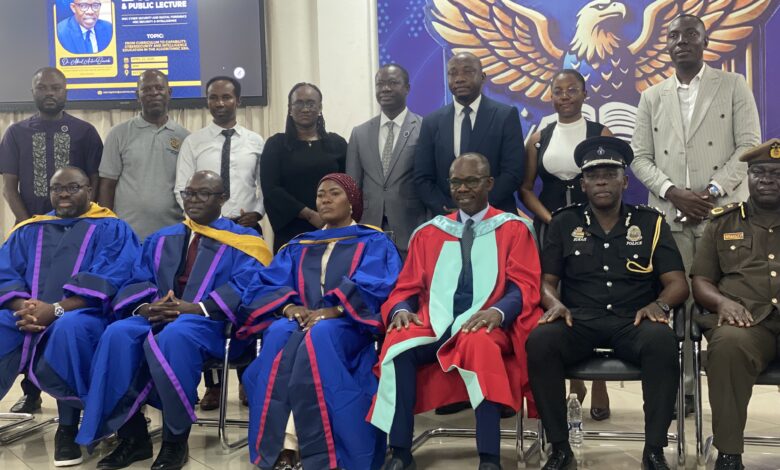
Accra Metropolitan University has launched two new master’s degree programmes in collaboration with the E-Crime Bureau to help strengthen expertise in Ghana’s security and intelligence sector.
The programmes, MSc Cybersecurity and Digital Forensics and MSc Security and Intelligence, were officially introduced at a ceremony held on Wednesday, April 22, at the university’s Nungua campus in Accra.
The event also featured a public lecture under the theme From Curriculum to Capability: Cybersecurity and Intelligence Education in the Algorithmic Era, which focused on preparing professionals for the demands of a technology-driven world.
In her remarks, Acting Vice-Chancellor Professor Goski B. Alabi said the introduction of the programmes reflects the growing need for advanced training in cybersecurity and intelligence.
She explained that the partnership with the E-Crime Bureau is intended to connect academic studies with practical industry experience, ensuring students gain both knowledge and real-world skills.
Professor Alabi noted that through the collaboration, students will have access to practical learning opportunities, intelligence-led insights and exposure to real case scenarios, helping them graduate as industry-ready professionals.
She also pointed out that the university has adopted a similar partnership approach with the Electricity Company of Ghana for its MSc Energy Management and Policy programme.
Delivering the keynote lecture, former Director-General of the Cyber Security Authority, Dr Albert Antwi-Boasiako, called for a major shift in Ghana’s educational curriculum to keep pace with technological advancement.
Speaking on The Algorithmic Era – Redefining Cybersecurity and Intelligence, he described the modern age as one where algorithms increasingly shape decisions, influence knowledge and affect the way people think.
He stressed that education should go beyond theory and focus on building capability, especially the ability to act effectively in high-pressure and uncertain situations.
According to him, students pursuing careers in cybersecurity and intelligence must develop skills in threat analysis, digital forensics, intelligence synthesis, counter-intelligence, offender profiling and risk-based decision-making.
Dr Antwi-Boasiako said these competencies are essential for the modern professional, who must combine the roles of technologist, analyst, strategist and ethicist.
He further urged students to take a questioning approach to technology by examining the assumptions, biases, limitations and security concerns within algorithms, adding that education in this era is both technical and philosophical.
He also emphasized that because technology evolves constantly, learning can no longer be seen as limited to a phase of life, but must be continuous.